
The history of sourdough: an ancient legacy still alive in our kitchens
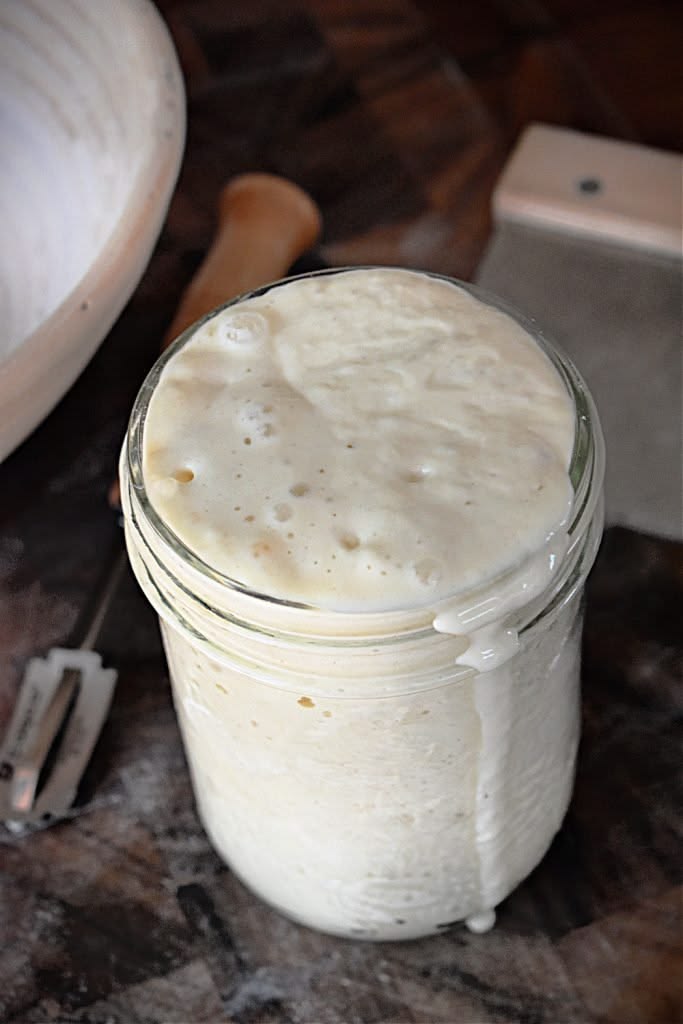
Sourdough is so much more than a way to make bread. It's the result of a natural transformation that has been with humanity for thousands of years, and today it's sparking new interest among people who want to better understand the food they make and eat.
Behind every fermented dough there's a combination of flour, water, wild yeasts and bacteria working together during fermentation. Although today we can explain scientifically what happens, for centuries bakers learned to recognize it through experience, watching how the aroma, texture and volume of their dough changed.
At Golden Crumbs Kitchen, we want to recover that knowledge and combine it with what we know about baking today. So on this journey, we'll explore where sourdough came from, how it evolved through different eras and why traditional fermentation still has an important place in what we eat.
1. The first fermented breads: a story that begins in ancient times
The history of fermented bread goes back thousands of years. In ancient civilizations, breadmaking gradually became an essential part of daily food, and knowledge of fermentation was passed down from one generation to the next.
Ancient Egypt holds a special place in this story. There's evidence that fermented breads were made there thousands of years ago. The bakers of the time didn't understand microorganisms the way we do today, but they had learned to harness the natural processes that produced airier dough and breads with different textures.
Spontaneous fermentation happens when the microorganisms present in flour and the environment find the right conditions to grow. When flour is mixed with water and left to rest, yeasts and bacteria can start to work and transform the dough.
Over time, bakers learned to save a piece of fermented dough to add to a new batch. This practice kept cultures alive and led to increasingly consistent baking methods.
What's fascinating is that, although we now have the science to understand these processes, the core idea is still the same: giving microorganisms time to transform a simple mix of ingredients.
2. Greece and Rome: bread becomes a craft
As breadmaking techniques spread across the Mediterranean, baking bread became more and more important in everyday life.
In ancient Greece and Rome, different methods of preparing and baking bread developed. Ovens, tools and the way work was organized evolved, and bread production became a specialized trade.
A fascinating example comes from Pompeii, the Roman city buried by the eruption of Mount Vesuvius in 79 AD. Archaeological finds include carbonized loaves that let us study the shapes and practices of Roman baking.
One of the best known is the panis quadratus, recognizable by the divisions scored into its surface. These remains bring us closer to a time when bread already played an important role in people's diets and in how cities were organized.
Although not all ancient breads were made in exactly the same way, these finds show that breadmaking had a far more complex history than simply mixing flour and water.
3. The Middle Ages: knowledge passed down through generations
During the Middle Ages, bread remained a staple food in many parts of Europe. Making it was tied to home kitchens as well as to communal ovens and bakeries.
Techniques varied by region, the grains available, the climate and local customs. In some places wheat dominated; in others, rye and other grains played an important role.
Bakers learned to tell when a dough was ready through very specific signs: its volume, elasticity, aroma and how it behaved in the oven.
Saving a piece of fermented dough made it possible to start new batches, although keeping it active took care and experience. Each environment could favor different microbial communities, contributing to the variety of flavors we associate with traditional breads today.
Sourdough wasn't just another ingredient. It was part of a body of practical knowledge that made it possible to bake bread long before modern methods of growing and preserving yeast existed.
4. The birth of microbiology: science explains fermentation
For a long time, bakers knew how to use fermentation without knowing exactly what caused it. That began to change with the development of microbiology in the 19th century.
Research by scientists such as Louis Pasteur helped demonstrate the role of microorganisms in processes like fermentation. Their work helped turn a practice based mostly on experience into a process that could also be studied and understood scientifically.
Two main groups of microorganisms are at work in sourdough: yeasts and lactic acid bacteria.
Yeasts produce carbon dioxide, which helps the dough expand. Bacteria produce organic acids and other compounds that affect the flavor, aroma and properties of the dough.
The exact makeup of these communities depends on factors like the flour, hydration, temperature, time and how the culture is maintained.
This knowledge paved the way for new ways of controlling fermentation and for increasingly predictable baking processes.
5. Industrialization: speed and new ways of making bread
With industrialization, baking went through major changes. Growing cities and the need to produce large quantities of food drove the development of faster, more standardized methods.
Commercial yeast made it easier to control the rise and cut the time needed to make many kinds of bread. This was a big advantage for bakeries that needed to keep production steady.
Yet sourdough fermentation never disappeared. It lived on in many baking traditions, especially in breads where flavor, texture and the unique qualities of fermentation took center stage.
Today we know that the difference between a sourdough loaf and one made with commercial yeast isn't simply that one is traditional and the other modern. Both can be part of a varied diet. What changes is the process, and with it, the characteristics of the final product.
Choosing a technique depends on the recipe, the type of flour, the result you're after and the time you have.
6. The return of sourdough to today's kitchens
In recent years, home sourdough baking has seen a wave of renewed interest. Many people have started keeping their own starter, experimenting with different flours and learning to read each stage of fermentation.
Part of its appeal lies in the experience of making food from scratch. Feeding your starter, watching its activity, kneading and waiting for the dough to develop invites you to pay closer attention to the process.
There's also a growing interest in knowing what goes into our food and understanding how traditional techniques can change its properties.
Sourdough brings both together: it preserves ancient knowledge while offering a field of study for modern food science.
It's not that everything traditional is automatically better, but about understanding what each method offers and how we can use it mindfully.
7. What happens during sourdough fermentation?
To understand why sourdough can affect the characteristics of bread, it helps to know some of the changes that take place during fermentation.
Yeasts produce gas and help build the crumb
Yeasts feed on certain sugars in the dough and produce carbon dioxide. This gas gets trapped in the dough's structure and helps it rise.
How those bubbles form and hold up shapes the final structure of the bread, from a tight crumb to a more open, airy one.
Bacteria produce organic acids
Lactic acid bacteria produce compounds that change the acidity of the dough. These changes contribute to the signature flavor of many sourdough breads and can affect the activity of enzymes in the flour.
Acidity and fermentation time also affect proteins and carbohydrates, although how much depends on the baking conditions.
Fermentation changes some components of the flour
During a long enough fermentation, the flour's enzymes and microbial activity can break down some of the proteins and carbohydrates.
These changes matter because they can affect the availability of certain nutrients and how the dough behaves. However, the result isn't the same in every recipe: the makeup of the culture, the type of grain, hydration, temperature and the length of the process all play a role.
8. Why can sourdough bread have nutritional advantages?
One reason sourdough is studied is that fermentation can change some of the nutritional properties of bread. Scientific research has identified several interesting mechanisms, although their real effects on health depend on the product and the person.
1. It may improve the availability of some minerals
Whole grains contain phytic acid, a compound that can bind to minerals like iron and zinc and reduce how much the body can absorb.
During acidic fermentation, enzyme activity can break down some of the phytic acid. Under certain conditions, this can make some of the minerals in bread more available.
The effect depends on the type of flour and the fermentation conditions; it doesn't mean every sourdough loaf automatically provides more absorbable minerals.
2. It may change how proteins and carbohydrates are digested
The enzymes and microorganisms at work during fermentation can partially break down certain components of the flour.
In some bakes, these changes may make certain components easier to digest. That said, digestive tolerance varies from person to person, and there's no guarantee that every sourdough bread will be easier for everyone to digest.
3. It may affect your blood sugar response after eating
Some research has found different blood sugar responses after eating certain sourdough breads compared with other breads.
Proposed mechanisms include the production of organic acids and changes to the starch structure during fermentation and baking. However, study results aren't consistent.
The response also depends on the type of flour, fiber content, the recipe, portion size and individual factors. So it isn't accurate to say that all sourdough bread has a low glycemic index or that it controls blood sugar on its own.
4. It can add flavor and help bread keep longer
Fermentation develops the complex aromas and flavors that set many sourdough breads apart. Plus, the acidity and other changes during the process can slow down spoilage in some products.
This can help bread stay fresh longer, although how well it keeps also depends on moisture, the recipe, storage and environmental conditions.
5. It can be part of a balanced diet
The nutritional value of bread doesn't depend only on how it's fermented. The grains used, the amount of fiber, added ingredients and your overall diet matter too.
Bread made with whole-grain flour and a proper fermentation can provide fiber and other nutrients found in the grain. So when choosing bread, it's worth looking at both its ingredients and how it's made.
The scientific evidence is promising in some respects, but it doesn't yet allow us to attribute universal clinical benefits to all sourdough breads. A systematic review of clinical studies highlights exactly how important microbial strains, flours and fermentation conditions are when interpreting its potential benefits.
9. What sourdough can't do
Talking about its advantages also means acknowledging its limits.
Traditional sourdough doesn't turn wheat bread into a gluten-free food. Although a long fermentation can break down some of the proteins, bread made with wheat, rye or barley isn't considered safe for people with celiac disease, unless it's a product made specifically gluten-free under the right conditions.
Nor are all sourdough breads whole grain, low in salt or nutritionally superior to other kinds. A recipe made with refined flour, lots of salt or added ingredients will still have those characteristics, no matter how it's fermented.
If you're looking for bread with a particular nutritional profile, look at its ingredients as a whole, not just whether it contains sourdough.
10. Sourdough: tradition, patience and knowledge
After thousands of years, sourdough still connects artisan baking with modern science. Its history reminds us that many cooking techniques were born from observation and experience, long before we could explain what was happening in our food.
Today we can better understand how yeasts and bacteria work, what changes fermentation brings about and what factors affect the properties of bread.
But one thing is still essential: learning to respect the dough's timing, knowing your ingredients and enjoying the process.
At Golden Crumbs Kitchen, we believe that baking bread at home is a chance to recover that knowledge and discover new ways of cooking with intention.
Sourdough isn't just a way of making bread. It's a blend of history, science and creativity that keeps evolving in every kitchen.
The next time you feed your starter or mix a dough, remember that you're taking part in an ancient tradition that still has so much to teach us.
Golden Crumbs Kitchen — Everyday recipes made with love.
Did you enjoy this post?
Let me know by leaving a rating and/or a comment below. Thank you!
{{ratingText}}